





This is one of the most common — and most frustrating — questions I hear in clinic.
Patients will say:
“I had a facelift.”
“I tightened my skin.”
“My jawline is better.”
“My neck looks great.”“So why do I still look… older?”
Here’s the hard truth most people don’t want to hear:
You can tighten skin and still look older.
And understanding why that happens is the key to finally seeing results that feel truly rejuvenating — not just “refreshed” or “mature.”
Tight Skin Isn’t the Same as a Younger Face
Imagine two photos:
- One woman at 40
- The same woman at 60
Her skin is smooth in both. Tight. Minimal wrinkles. Objectively “good skin.”
But if you saw her at dinner, you’d still know which one is 60.
Why?
Because aging isn’t just about the skin.
The face isn’t a curtain.
It’s a structure.
Skin simply drapes over what’s underneath — and what’s underneath changes dramatically after about age 45.
The Missing Piece No One Talks About: Facial Bone Loss
Think of your face like a shirt on a hanger.
Change the hanger — even slightly — and the shirt hangs differently.
That hanger is your facial skeleton.
As we age, especially around perimenopause and menopause, facial bones subtly remodel:
- The eye sockets widen
- The midface flattens
- The nose appears larger
- The jawline loses definition
- The lips lose projection
These changes can be millimeters — but millimeters matter in the face.
This is why someone can:
- Remove wrinkles with lasers
- Tighten skin with surgery
- Improve texture dramatically
…and still look their age.
Because the support system has changed.
Why Your DEXA Scan Can Be “Normal” — and Still Miss This
Many people are told:
“Your bone density looks great.”
And that may be true — for your hips and spine.
But facial bones remodel differently.
DEXA scans don’t capture early or localized changes in:
- The jaw
- The alveolar bone around the teeth
- The midface
- The orbital rim
And inflammation — especially gum disease — accelerates bone loss around the mouth even when overall bone density looks normal.
That’s why facial aging can feel sudden and confusing.
What Actually Triggers This Shift After 45?
Bone is living tissue. It’s constantly being built and broken down.
Two cell types control this process:
- Osteoblasts (build bone)
- Osteoclasts (break bone down)
When estrogen declines, that balance shifts.
Bone breakdown begins to outpace bone formation — especially in areas like the face that rely on constant micro-remodeling.
One signaling molecule plays a major role here: RANKL.
RANKL activates osteoclasts — the cells responsible for bone resorption.
More RANKL = more breakdown.
This is where things get interesting.
Where Vibration Enters the Conversation
Let me be very clear:
We do not yet have large, long-term human studies proving that vibration rebuilds facial bone.
But we do have strong biological evidence explaining how vibration may slow bone breakdown.
In laboratory studies, low-intensity, high-frequency vibration has been shown to:
- Suppress RANKL-driven osteoclast formation
- Reduce expression of bone-resorbing genes
- Inhibit differentiation of bone-eating cells
In other words:
Vibration appears to quiet the exact pathway responsible for age-related bone loss.
That doesn’t mean your face is growing new bone overnight.
But it does explain why, clinically, we often see:
- Less “tired” facial appearance
- Improved skin quality
- Better structural support over time
Structure First. Tightening Second.
This is where many people go wrong.
They chase:
- Tighter skin
- Stronger lasers
- More aggressive treatments
Without addressing structure.
That’s like painting a house with a cracked foundation.
Good rejuvenation rebuilds from the inside out.
The Complete Strategy After 45
If you want to slow facial aging at its source, tightening alone isn’t enough. You need to support the structure.
That means:
- Adequate protein intake
- Regular strength training
- Quality sleep
- Hormone balance (when appropriate)
- No smoking
- Minimal alcohol
- Vitamin D3 + Vitamin K2
Vitamin D alone is not enough.
K2 directs calcium to bone — including facial bone — instead of soft tissue.
Most people are deficient, even with sun exposure.
Practical Ways to Use Vibration
In real life, we apply vibration in simple, low-risk ways:
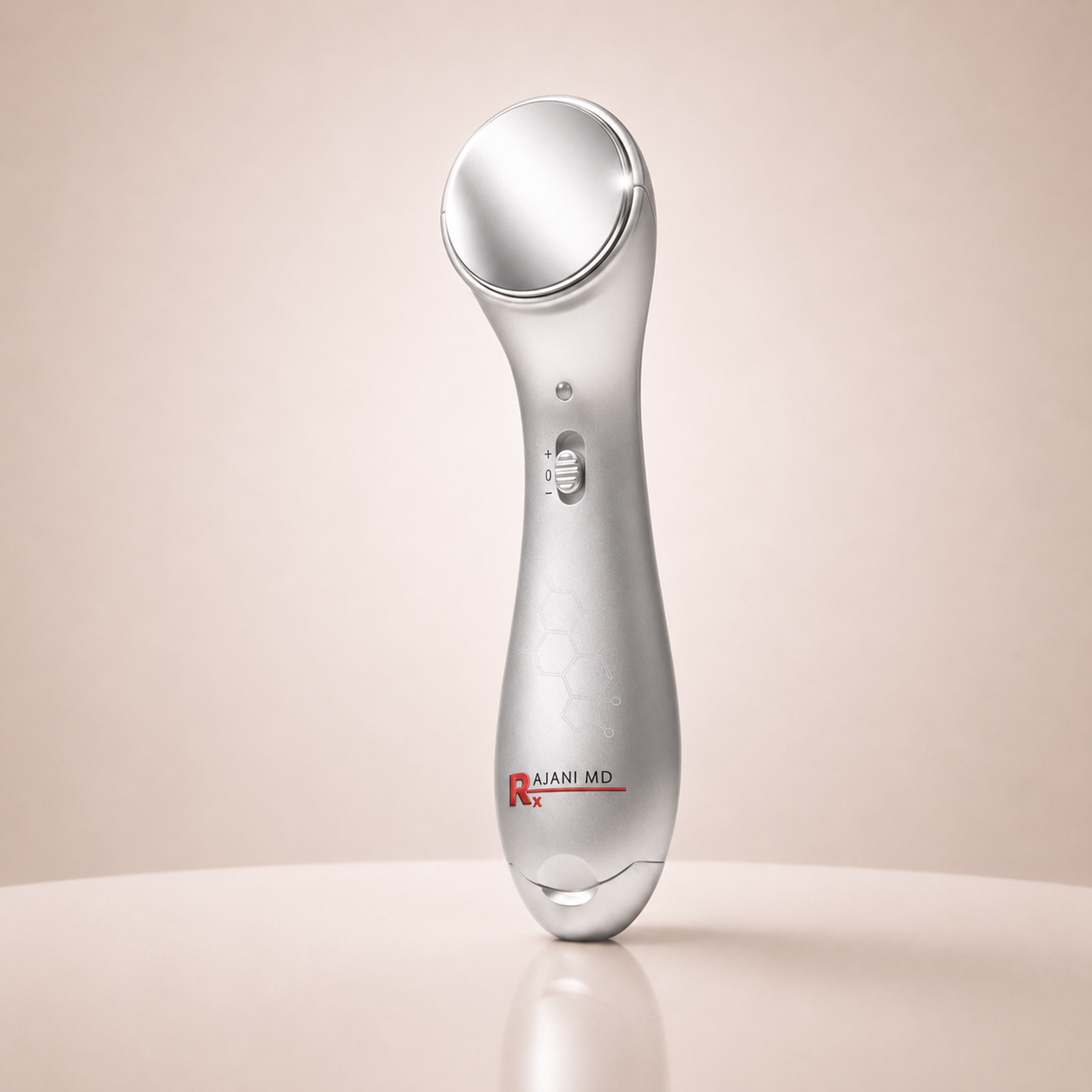
- Vibrating gua sha tools, especially in the morning for puffiness and early sagging
- Devices that combine vibration with red and near-infrared light, supporting circulation and cellular energy
- Vibrating massage tools already used at home
The goal isn’t aggression.
It’s consistent mechanical signaling that supports tissue health.
Why This Changes Everything
If you’re over 45 and feel like your face is aging faster than your skincare can keep up — you’re not imagining it.
And no, it’s not just about collagen.
It’s about rebuilding the frame.
Bad renovations slap on new paint and hope no one notices the cracks.
Smart renovations strengthen the structure first — so everything above it looks better naturally.
Once you understand this, you stop chasing tighter skin and start seeing younger-looking results that actually make sense.
Clinical Studies on
Low-magnitude high-frequency vibration inhibits RANKL-induced osteoclast differentiation of RAW264.7 cells
More Videos on Facial Aging
DISCLAIMER: This video does not contain any medical or health related diagnosis or treatment advice. Content provided on this YouTube Channel is for informational purposes only. For any medical or health related advice, please consult with a physician or other healthcare professionals. Further, information about specific products or treatments within this video are not intended to diagnose, treat, cure or prevent disease.