



LED masks are everywhere now, and the marketing rarely explains the one thing that matters: the color. Each light color serves a specific purpose, and using the wrong one is a waste of your 10 minutes.
This is a simple, honest color chart. Once you know what each wavelength does, choosing the right mode and device becomes easy. Let’s get started!
The LED Light Therapy Mask Color Chart
Each "color" is really a wavelength, measured in nanometers (nm). The wavelength determines how deep the light penetrates and what it does once it reaches that depth.
-
Blue light, around 415nm. Sits on the surface. Targets the bacteria and oil linked to breakouts. Best for congestion and acne-prone skin.
-
Red light, around 630nm. Reaches the deeper layers where collagen lives. Supports collagen and elastin. Best for fine lines, firmness, tone, and calming visible redness.
-
Near-infrared light, around 830nm. Travels deepest of the three. Supports repair, elasticity, and circulation. Best for deeper lines, recovery, and overall rejuvenation.
That is the working chart. Red builds, blue clears, and near-infrared supports deeper repair.
Red Light LED Mask: Firmness and Wrinkles
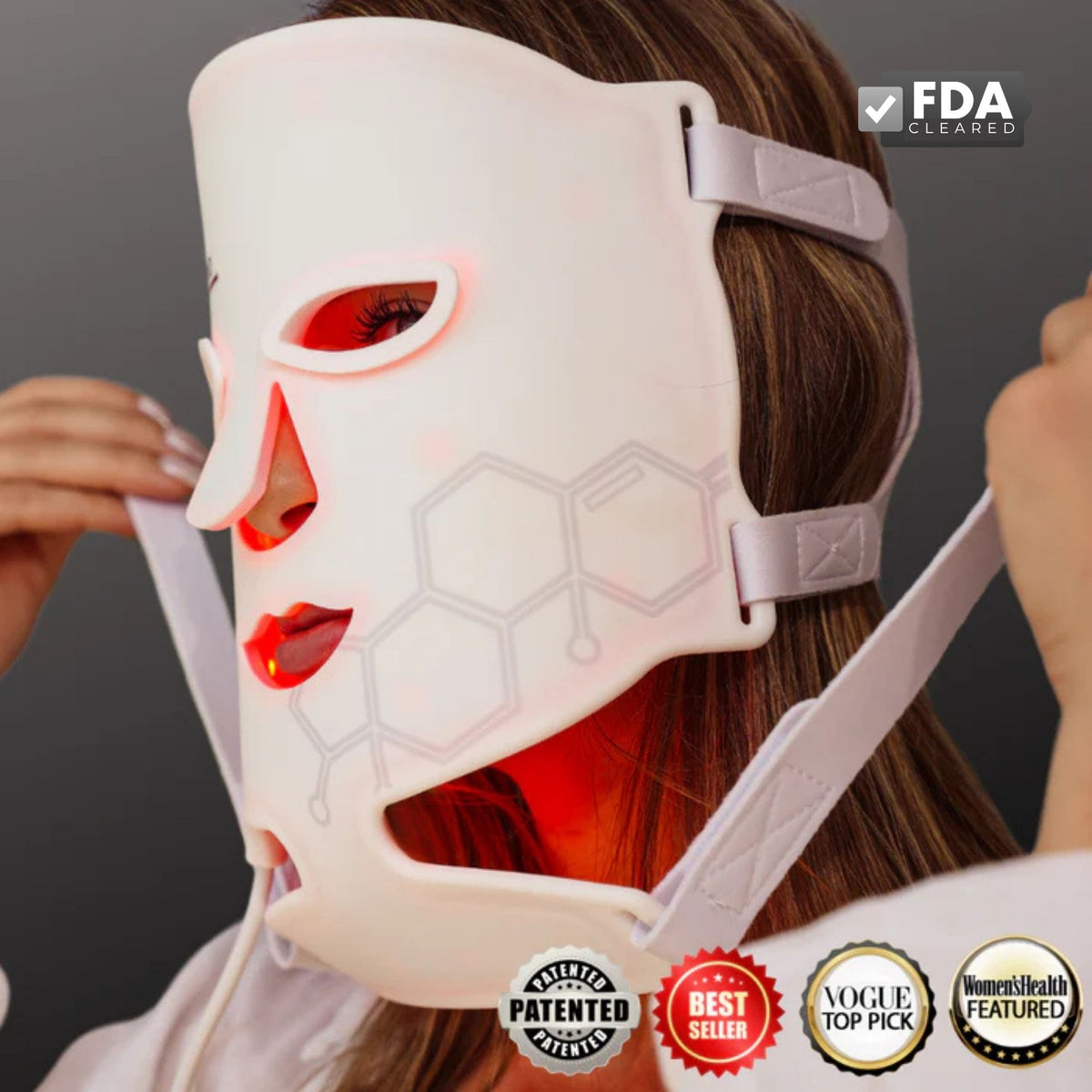
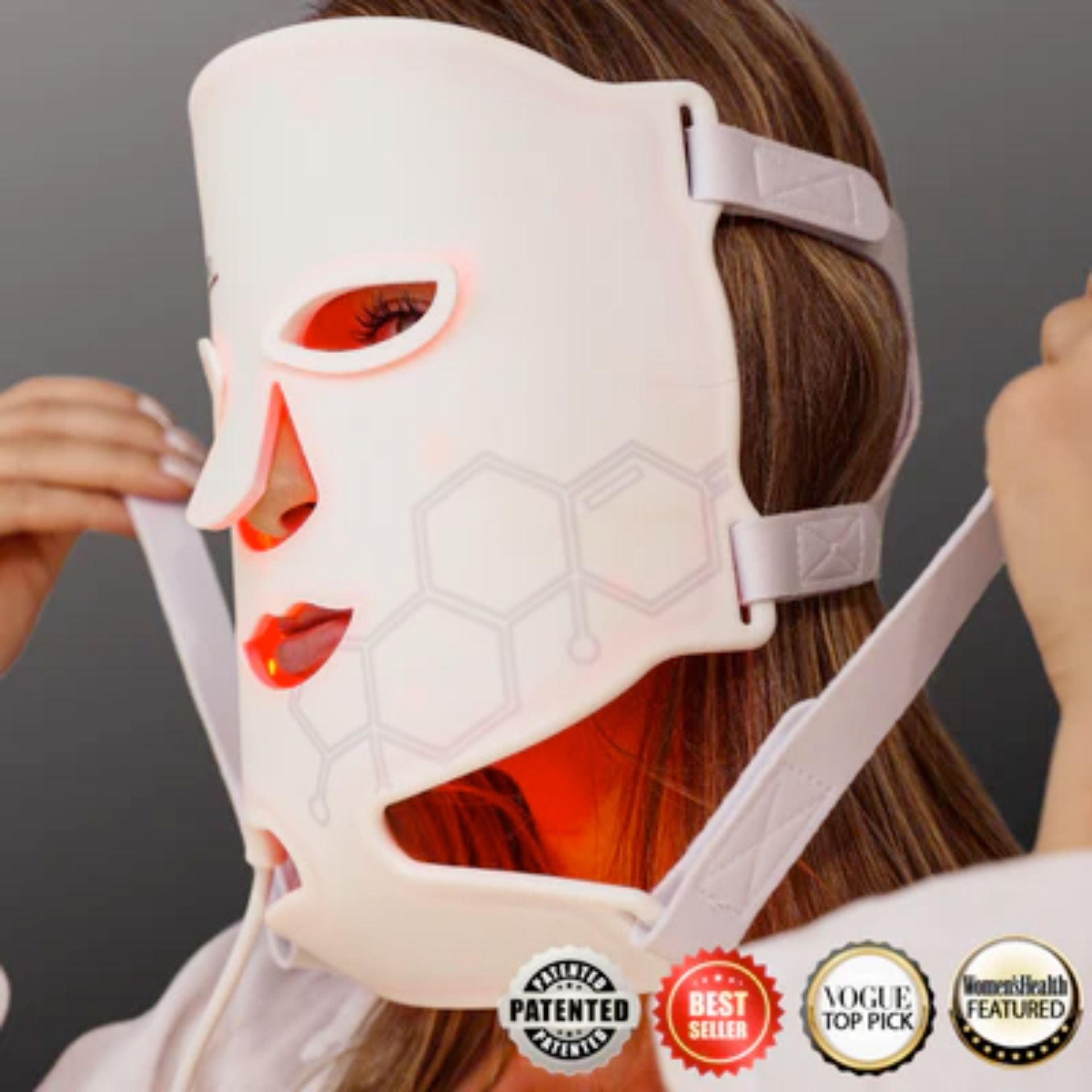
Red light is the anti-aging workhorse. It nudges skin cells to produce more collagen, which over time can soften lines and improve firmness. A red light LED mask, like the PlasmaGLO LED Face and Jowl Mask, combines 630nm red with 830nm near-infrared across 234 LEDs in 10-minute sessions and is FDA-cleared. The patented design also reaches the jowls and neck, which most flat masks miss.
Blue Light LED Mask: Clarity and Breakouts
A blue light LED mask targets the surface causes of breakouts. Blue is often paired with red to calm inflammation while it clears. The PlasmaGLO mask includes a blue deep-cleansing mode and a red-plus-blue soothing mode for exactly this reason, so you can switch your approach as your skin changes through the month.

Near-Infrared: The Deep Repair Layer
Near-infrared at 830nm does not appear as a bright visible color, but it reaches the farthest. It supports the repair and elasticity work that happens below the surface. One useful detail: some people with melasma prefer to switch infrared off. The PlasmaGLO HALO Hair, Face and Neck Mask lets you do that in Mode 1. Mode 3 adds PEMF energy. All modes include coverage of the hairline and crown.
What About Green, Yellow, and Purple?
Many "seven-color" masks advertise green, yellow, and purple modes. The evidence behind those is thinner and more mixed. Red, near-infrared, and blue are the wavelengths with the strongest track record and the clearest jobs, which is why a focused device usually beats a rainbow of weak lights.
Combining Colors and Choosing Your Device
You do not have to pick just one color. Combination modes let you treat firmness and clarity together. The right device depends on your target area:
For full face plus jowls and neck, the PlasmaGLO LED Face and Jowl Mask is the core option. For face, neck, scalp, and hairline with PEMF, step up to the PlasmaGLO HALO.
For the delicate under-eye area, the PlasmaGLO LED Duo uses red, near-infrared, and PEMF in short targeted sessions. For sculpting with red and infrared plus vibration, the PlasmaGLO LED Gua Sha Suite doubles as a massage tool.
There is even a PlasmaGLO LED Lip and Mouth device for that zone, and a replacement controller if you ever need a new battery.
Want help matching a device to your concern? The skin quiz is a quick start, and the eye routine and lower face and jowls routine show how to slot LED into a full regimen.

Frequently Asked Questions
How long is one LED session?
On the PlasmaGLO masks, a session runs about ten minutes.
Can I use red and blue light on the same day?
Yes. Many people use blue for breakouts and red for firmness, either in a combo mode or at separate times.
How often should I use an LED mask?
Most routines use it most days of the week. Consistency matters more than long single sessions.
Is near-infrared safe for melasma?
Some people with melasma prefer to switch infrared off, which the HALO mask allows in Mode 1.
Do LED masks replace my skincare?
No. They work best on clean skin and alongside your serums and SPF.


Match the Color to the Goal
LED therapy is simple once you read it in terms of wavelength rather than marketing. Build for firmness with red light, clear with blue light, repair deep with near-infrared light, and choose the device that fits your face.
Browse the full LED collection to find your match.
Disclaimer: This article is educational and not medical advice. Follow the instructions included with your device.
References:
Lee, So Young, et al. “Effects of Radiofrequency, Electroacupuncture, and Low-Level Laser Therapy on the Wrinkles and Moisture Content of the Forehead, Eyes, and Cheeks.” Journal of Physical Therapy Science, vol. 27, no. 5, 2015, pp. 1467–1470.
Whelan, Harry T., et al. “Effect of NASA Light-Emitting Diode Irradiation on Wound Healing.” Journal of Clinical Laser Medicine & Surgery, vol. 19, no. 6, 2001, pp. 305–314. PubMed, doi:10.1089/104454701753342758.
American Academy of Dermatology. “Hair Loss: Who Gets and Causes.” AAD.org, American Academy of Dermatology Association, www.aad.org/public/diseases/hair-loss.
Avci, Pinar, et al. “Low-Level Laser (Light) Therapy (LLLT) for Treatment of Hair Loss.” Lasers in Surgery and Medicine, vol. 46, no. 2, 2014, pp. 144–151. PubMed Central, PMC3944668.
Wunsch, Alexander, and Karsten Matuschka. “A Controlled Trial to Determine the Efficacy of Red and Near-Infrared Light Treatment in Patient Satisfaction, Reduction of Fine Lines, Wrinkles, Skin Roughness, and Intradermal Collagen Density Increase.” Photomedicine and Laser Surgery, vol. 32, no. 2, 2014, pp. 93–100. PubMed Central, doi:10.1089/pho.2013.3616.
Barolet, Daniel, et al. “Regulation of Skin Collagen Metabolism In Vitro Using a Pulsed 660 nm LED Light Source: Clinical Correlation with a Single-Blinded Study.” Journal of Investigative Dermatology, vol. 129, no. 12, 2009, pp. 2751–2759. ScienceDirect, doi:10.1038/jid.2009.186.
Avci, Pinar, et al. “Low-Level Laser (Light) Therapy (LLLT) in Skin: Stimulating, Healing, Restoring.” Seminars in Cutaneous Medicine and Surgery, vol. 32, no. 1, 2013, pp. 41–52. PubMed Central, PMC4126803.
DISCLAIMER: This video does not contain any medical or health related diagnosis or treatment advice. Content provided on this YouTube Channel is for informational purposes only. For any medical or health related advice, please consult with a physician or other healthcare professionals. Further, information about specific products or treatments within this video are not intended to diagnose, treat, cure or prevent disease.