






CLINICAL STUDIES
Explore the peer-reviewed clinical studies that validate the efficacy of our light therapy and aesthetic protocols.
Efficacy of Home-Use Light-Emitting Diode Device at 637 and 854nm for Facial Rejuvenation: A Split-Face Pilot Study
The use of light-emitting diode (LED) in combination wavelength for facial rejuvenation has been previously reported. Nowadays, there has been a growing market for home-use cosmetic devices because of its low cost and convenience.
READ MORE

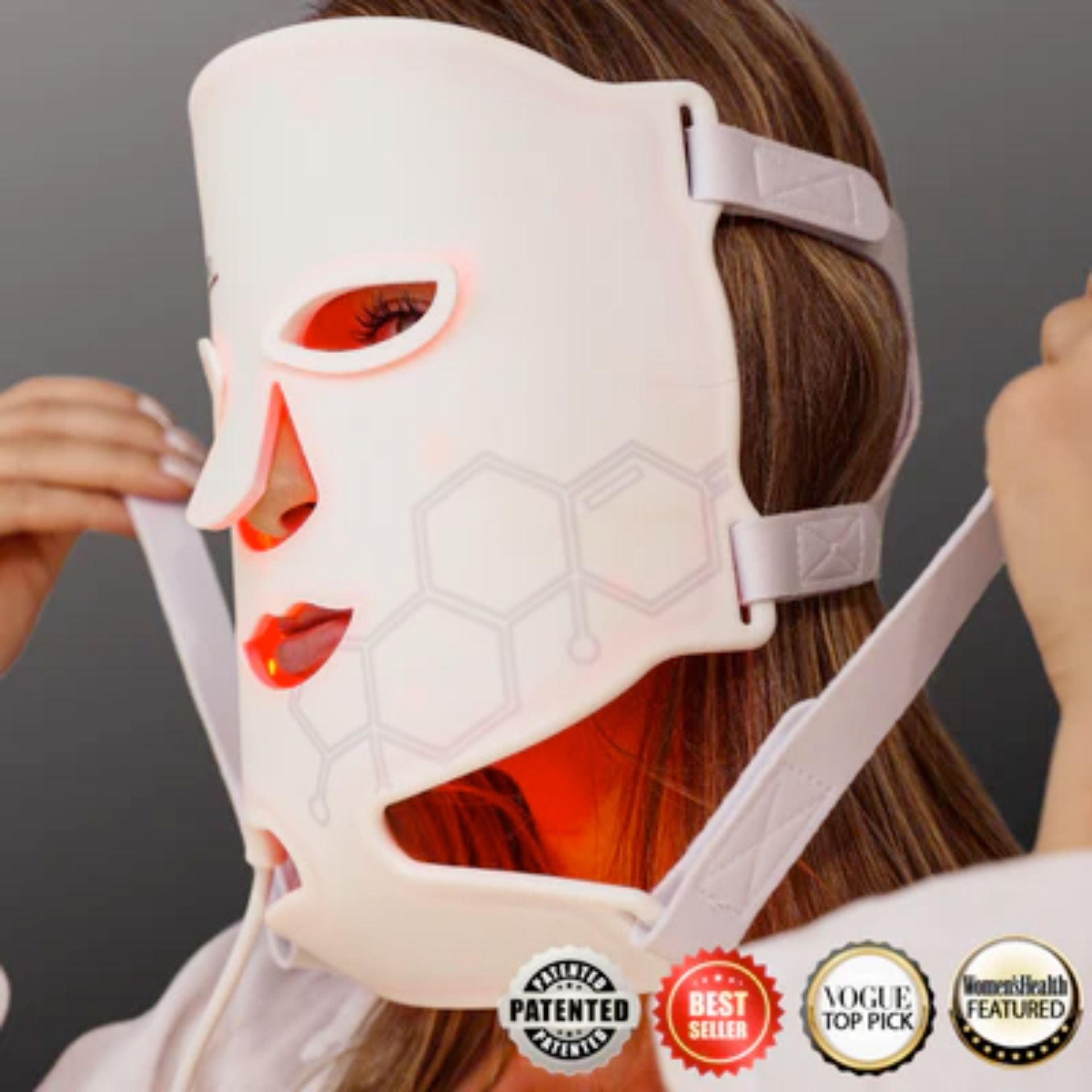
NASA, Light Therapy, and the Clinical Science Behind PlasmaGLO™ LED HALO Mask
Long before LED devices entered skincare, specific wavelengths of light were studied in extreme environments where healing, recovery, and cellular performance weren’t optional—they were essential. The discoveries made then now form the foundation of modern photobiomodulation, and they explain why properly engineered LED therapy can support skin health in ways topical products alone cannot.
READ MORE
Male facial rejuvenation using a combination 633, 830, and 1072 nm LED face mask
Home-based photobiomodulation is a popular treatment modality for patients seeking non-invasive aesthetic treatment. Studies demonstrate that photobiomodulation is effective for skin rejuvenation, which is aimed at improving the overall appearance of the skin by reducing fine lines and wrinkles and improving skin texture, skin tone, and dyspigmentation. Most current skin rejuvenation research focuses on treatments in women. However, men's aesthetics remains an underserved market. A combined red light (RL) and near-infrared (NIR) light-emitting diode (LED) has been designed specifically to target male skin, which may have different physiological and biophysical properties compared to female skin. Herein, the safety and efficacy of a commercially available RL and NIR (633, 830, and 1072 nm) LED array designed to be worn as a face mask was assessed.
READ MORE
The clinical and histological effect of home-use, combination blue-red LED phototherapy for mild to moderate acne vulgaris in Korean patients: a double-blind, randomized controlled trial.
Blue and red light have been reported to have beneficial effects on acne. However, there has been no double-blind, randomized study of acne treatment for combined blue and red light-emitting diode (LED) devices, and the associated molecular mechanisms have rarely been investigated.
READ MORE
Regulation of Skin Collagen Metabolism In Vitro Using a Pulsed 660 nm LED Light Source: Clinical Correlation with a Single-Blinded Study
It has been reported that skin aging is associated with a down regulation in collagen synthesis and an elevation in matrix metalloproteinase (MMP) expression. This study investigated the potential of light-emitting diode (LED) treatments with a 660nm sequentially pulsed illumination formula in the photobiomodulation of these molecules. Histological and biochemical changes were first evaluated in a tissue-engineered Human Reconstructed Skin (HRS) model after 11 sham or LED light treatments.
READ MORE
A controlled trial to determine the efficacy of red and near-infrared light treatment in patient satisfaction, reduction of fine lines, wrinkles, skin roughness, and intradermal collagen density increase
The purpose of this study was to investigate the safety and efficacy of two novel light sources for large area and full body application, providing polychromatic, non-thermal photobiomodulation (PBM) for improving skin feeling and appearance.
READ MORE
Long-pulsed dye laser-mediated photodynamic therapy combined with topical therapy for mild to severe comedonal, inflammatory, or cystic acne
Acne patients who fail to respond to conventional treatments have been treated with isotretinoin, an effective treatment coming under strict regulation due to the risk of significant side effects. Photodynamic therapy (PDT) may be a viable alternative treatment for recalcitrant acne of various types and levels of severity.
READ MORE

Photodynamic Therapy and Skin Appendage Disorders: A Review
Photodynamic therapy (PDT) is a noninvasive treatment that utilizes light treatment along with application of a photosensitizing agent. In dermatology, PDT is commonly used and approved for the treatment of oncological conditions such as actinic keratosis, Bowen disease and superficial basal cell carcinoma. In the last 2 decades however, PDT has also been used for the treatment of several nonneoplastic dermatological diseases. The present review summarizes published data on PDT application in skin appendage disorders.
READ MORE
Comparison of Red and Infrared Low-level Laser Therapy in the Treatment of Acne Vulgaris
Acne vulgaris is a very prevalent skin disorder and remains a main problem in practice. Recently, phototherapy with various light spectrums for acne has been used. There are some evidences that low-level laser therapy (LLLT) has beneficial effect in the treatment of acne lesions. In this study, two different wavelengths of LLLT (630 and 890 nm) were evaluated in treatment of acne vulgaris.
READ MORE
The clinical and histological effect of home-use, combination blue-red LED phototherapy for mild-to-moderate acne vulgaris in Korean patients: a double-blind, randomized controlled trial.
Blue and red light have been reported to have beneficial effects on acne. However, there has been no double-blind, randomized study of acne treatment for combined blue and red light-emitting diode (LED) devices, and the associated molecular mechanisms have rarely been investigated.
READ MORE
The Anti-Acne Effect of Near-Infrared Low-Level Laser Therapy
Acne vulgaris is a skin problem affecting many people of different ages. Phototherapy is one of the acne treatment options. The aim of the study was to assess the effect of near-infrared low-level laser therapy on acne lesions.
READ MORE
Regulation of Skin Collagen Metabolism In Vitro Using a Pulsed 660 nm LED Light Source: Clinical Correlation with a Single-Blinded Study
It has been reported that skin aging is associated with a down regulation in collagen synthesis and an elevation in matrix metalloproteinase (MMP) expression. This study investigated the potential of light-emitting diode (LED) treatments with a 660nm sequentially pulsed illumination formula in the photobiomodulation of these molecules. Histological and biochemical changes were first evaluated in a tissue-engineered Human Reconstructed Skin (HRS) model after 11 sham or LED light treatments.
READ MORE
Low-level laser (light) therapy (LLLT) in skin: stimulating, healing, restoring
Low-level laser (light) therapy (LLLT) is a fast-growing technology used to treat a multitude of conditions that require stimulation of healing, relief of pain and inflammation, and restoration of function. Although the skin is the organ that is naturally exposed to light more than any other organ, it still responds well to red and near-infrared wavelengths. The photons are absorbed by mitochondrial chromophores in skin cells. Consequently electron transport, adenosine triphosphate (ATP) nitric oxide release, blood flow, reactive oxygen species increase and diverse signaling pathways get activated. Stem cells can be activated allowing increased tissue repair and healing.
READ MORE
A controlled trial to determine the efficacy of red and near-infrared light treatment in patient satisfaction, reduction of fine lines, wrinkles, skin roughness, and intradermal collagen density increase
The purpose of this study was to investigate the safety and efficacy of two novel light sources for large area and full body application, providing polychromatic, non-thermal photobiomodulation (PBM) for improving skin feeling and appearance.
READ MORE
Effects of radiofrequency, electroacupuncture, and low-level laser therapy on the wrinkles and moisture content of the forehead, eyes, and cheek
The purpose of this study was to investigate the effects of radiofrequency (RF), electroacupuncture (EA), and low-level laser therapy (LLLT), which are used in physical therapies, on facial wrinkles and moisture. Subjects and Methods: A total of 30 female participants aged 30–55 years participated in this study and the results will be used as a reference for further development of skin physical therapy.
READ MORE
Male facial rejuvenation using a combination 633, 830, and 1072 nm LED face mask
Home-based photobiomodulation is a popular treatment modality for patients seeking non-invasive aesthetic treatment. Studies demonstrate that photobiomodulation is effective for skin rejuvenation, which is aimed at improving the overall appearance of the skin by reducing fine lines and wrinkles and improving skin texture, skin tone, and dyspigmentation. Most current skin rejuvenation research focuses on treatments in women. However, men's aesthetics remains an underserved market. A combined red light (RL) and near-infrared (NIR) light-emitting diode (LED) has been designed specifically to target male skin, which may have different physiological and biophysical properties compared to female skin. Herein, the safety and efficacy of a commercially available RL and NIR (633, 830, and 1072 nm) LED array designed to be worn as a face mask was assessed.
READ MORE
Efficacy of Home-Use Light-Emitting Diode Device at 637 and 854nm for Facial Rejuvenation: A Split-Face Pilot Study
The use of light-emitting diode (LED) in combination wavelength for facial rejuvenation has been previously reported. Nowadays, there has been a growing market for home-use cosmetic devices because of its low cost and convenience.
READ MORE
The Diagnosis and Treatment of Hair and Scalp Diseases
Alopecia areata is patchy hair loss arising over a short time and involving the scalp, eyebrows, beard, or entire body. The hair loss of alopecia areata is reversible in principle but hard to treat. Folliculitis decalvans is a form of alopecia with scarring, characterized by inflamed papules, pustules, and crusts at the edges of the lesions. Lichen planopilaris generally presents with small patches of baldness, peripilar erythema, and round areas of skin scaling. Kossard's frontal fibrosing alopecia is characterized by a receding hairline and loss of eyebrows.
READ MORE
Hair Loss: Common Causes and Treatment
Hair loss is often distressing and can have a significant effect on the patient's quality of life. Once the precipitating cause is removed, the hair typically will regrow. Trichotillomania is an impulse-control disorder; treatment is aimed at controlling the underlying psychiatric condition. Trichorrhexis nodosa occurs when hairs break secondary to trauma and is often a result of hair styling or overuse of hair products.
READ MORE
Low-level laser (light) therapy (LLLT) for treatment of hair loss
Alopecia is a common disorder affecting more than half of the population worldwide. Androgenetic alopecia, the most common type, affects 50% of males over the age of 40 and 75% of females over 65. Only two drugs have been approved so far (minoxidil and finasteride) and hair transplant is the other treatment alternative. This review surveys the evidence for low-level laser therapy (LLLT) applied to the scalp as a treatment for hair loss and discusses possible mechanisms of actions.
READ MORE
A new path in defining light parameters for hair growth: Discovery and modulation of photoreceptors in human hair follicle
Though devices for hair growth based on low levels of light have shown encouraging results, further improvements of their efficacy is impeded by a lack of knowledge on the exact molecular targets that mediate physiological response in skin and hair follicle. The aim of this study was to investigate the expression of selected light-sensitive receptors in the human hair follicle and to study the impact of UV-free blue light on hair growth ex vivo.
READ MORE
Low Level Laser Therapy: A Panacea for oral maladies
A variety of therapeutic effects of Low Level Laser Therapy have been reported on a broad range of disorders. It has been found amenably practical in dental applications including soft as well as hard tissues of the oral cavity. LLLT has been found to be efficient in acceleration of wound healing, enhanced remodelling and bone repair, regeneration of neural cells following injury, pain attenuation, endorphin release stimulation and modulation of immune system. The aforementioned biological processes induced by Low level lasers have been effectively applied in treating various pathological conditions in the oral cavity.
READ MORE
Low Level Laser Therapy: A Panacea for Oral Maladies
A variety of therapeutic effects of Low Level Laser Therapy have been reported on a broad range of disorders. It has been found amenably practical in dental applications, including soft as well as hard tissues of the oral cavity. LLLT has been found to be efficient in acceleration of wound healing, enhanced remodeling and bone repair, regeneration of neural cells following injury, pain attenuation, endorphin release stimulation and modulation of the immune system. The aforementioned biological processes induced by Low level lasers have been effectively applied in treating various pathological conditions in the oral cavity.
READ MORE
A controlled trial to determine the efficacy of red and near-infrared light treatment in reduction of fine lines, wrinkles, skin roughness, and intradermal collagen density increase
The purpose of this study was to investigate the safety and efficacy of two novel light sources for large area and full body application, providing polychromatic, non-thermal photobiomodulation (PBM) for improving skin feeling and appearance.
READ MORE
A controlled trial to determine the efficacy of red and near-infrared light treatment in reduction of fine lines, wrinkles, skin roughness, and intradermal collagen density increase
The purpose of this study was to investigate the safety and efficacy of two novel light sources for large area and full body application, providing polychromatic, non-thermal photobiomodulation (PBM) for improving skin feeling and appearance.
READ MORE
Effects of radiofrequency, electroacupuncture, and low-level laser therapy on the wrinkles and moisture content of the forehead, eyes, and cheek
The purpose of this study was to investigate the effects of radiofrequency (RF), electroacupuncture (EA), and low-level laser therapy (LLLT), which are used in physical therapies, on facial wrinkles and moisture. Subjects and Methods: A total of 30 female participants aged 30-55 years participated in this study and the results will be used as a reference for further development of skin physical therapy.
READ MORE