






Over the last year, we’ve seen treatments like Ozempic and similar GLP-1 medications become more commonly discussed not only for weight management but also for the aesthetic shifts that can come during rapid change. While a slimmer body and improved health markers are positive outcomes, a conversation is emerging around something less discussed: what is being called “Ozempic face.”
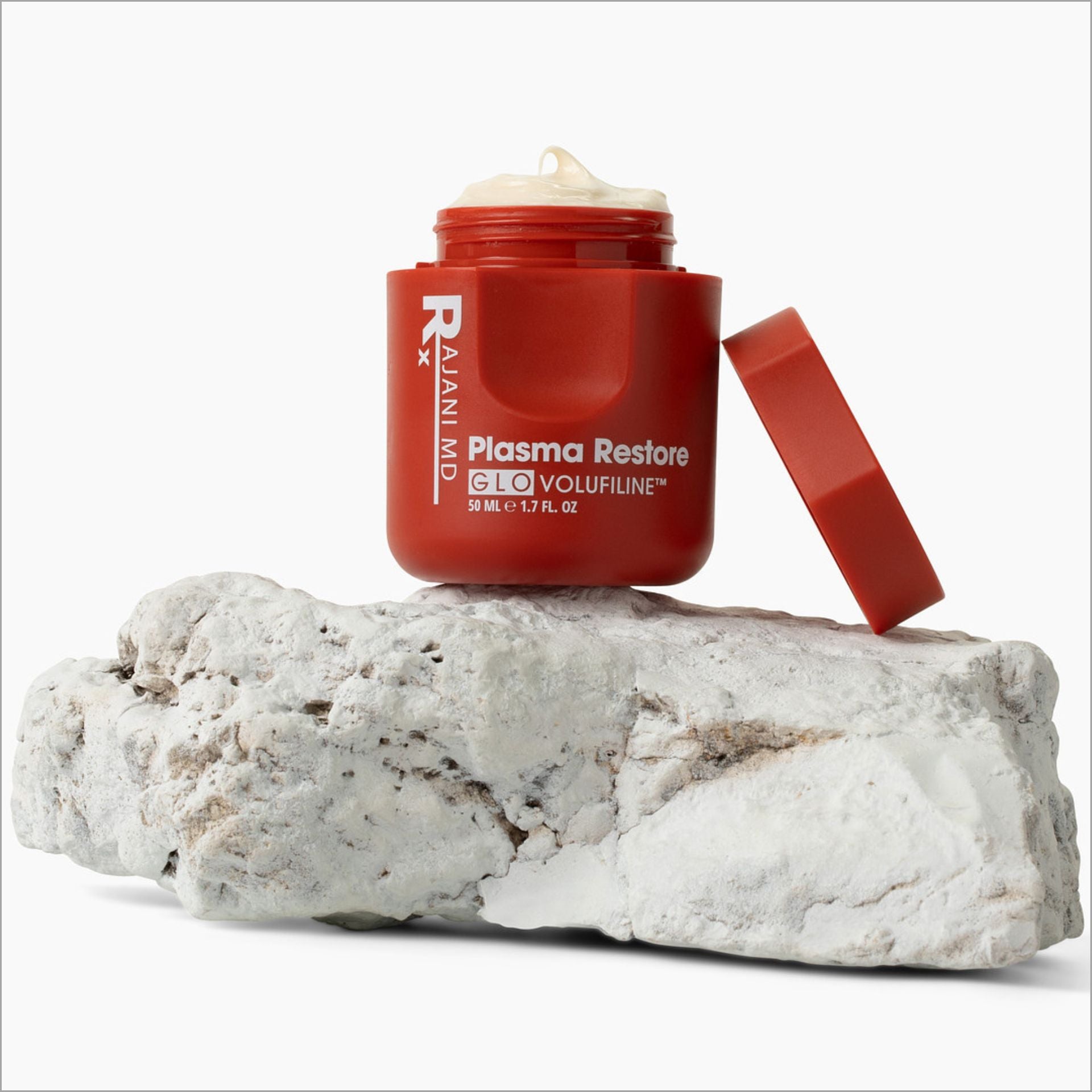
At Rajani MD, we’re committed to helping restore balance. In this blog, we’ll explore what ozempic face really means, why facial fat loss matters, and how innovation in skincare offers a solution, namely our own PlasmaRestore GLO Volufiline Cream, a clinic-tested, non-injectable way to rebuild volume.
What Is Ozempic Face and Why Does It Happen?
“Ozempic face” is a term used in aesthetic and dermatological circles to describe the hollowing and sagging appearance some individuals experience after rapid weight loss, often due to GLP-1 treatments like Ozempic or Wegovy. The medications don’t directly cause the effect; instead, it’s about how the body redistributes fat. As you lose body fat, your face can also lose its underlying support structure.
The facial fat pads that once helped maintain those gentle curves along the cheeks, temples, and under the eyes begin to shrink. With less padding beneath the skin, the once smooth surface can start to look sunken or tired. Add to that the natural decline of muscle tone and collagen, and you have the equation for visible aging accelerated by change.
Understanding this doesn’t mean being fatalistic. It means we can act instead of react. Knowing what causes the change allows us to approach it safely and effectively with skincare that supports what’s happening beneath the surface.
The Role of Facial Fat Pads: Why Volume Equals Youth
When we think of what makes a face look fresh and young, we often focus on skin texture, firmness, and clarity. But underneath the skin lies another key player, the facial fat pads. These small fat deposits work like internal cushions, helping maintain smooth contours and a natural glow by reflecting light evenly.
When those fat pads shrink due to aging, hormonal changes, diet shifts, or rapid weight loss, the skin above them begins to lose its structure. Cheeks may flatten, the under eyes may become more prominent, and the jawline may soften. The overall result? A less vibrant, more fatigued appearance.
The Architecture of the Face
Think of the face as layers: bone, fat, muscle, then skin. Each layer supports the next. Without the fat layer performing its role, the skin and muscle have more pressure placed on them.
Why They Shrink Over Time
It’s not just age. Hormonal changes, UV damage, lifestyle habits, and yes, significant weight changes all contribute to fat pad depletion.
Volume = Light Reflection
A well-filled face bounces light more flatteringly. When volume is lost, the way light hits the face changes. Shadows deepen, features look more angular, and texture becomes more visible.
Rebuilding Fat Pads Safely
That’s where skincare innovation comes in. Rather than turning immediately to injectables, we now have ingredients like Volufiline in our PlasmaRestore GLO Volufiline Cream that help signal the body to restore adipocyte (fat cell) activity.
When applied topically, these formulas can support the restoration of facial fullness without the recovery or risks associated with invasive procedures.
Traditional Fixes vs. Modern Science: Why Injections Aren’t the Only Answer
For decades, the go-to approach for volume loss in the face has been fillers or fat grafting. These treatments can be transformative. But they also come with a higher cost, potential downtime, risk of over-filling or uneven results, and sometimes migration of product.
On the flip side, we have modern skincare science. Active ingredients like Volufiline, advanced Vitamin C forms, phospholipids, and hyaluronic acid now offer impressive performance with none of the needles. These topical options don’t replace every injectable scenario, but they open a new path.
-
Fillers and Fat Grafting: Instant results, yes. But expense, repeat visits, and sometimes unnatural looks are trade-offs.
-
Laser and RF Devices: Great for tightening and texture improvement; less effective for restoring accurate volume.
-
Topical Fat-Rebuilding Science: Volufiline and similar actives give us a way to support adipose architecture through daily skincare.
-
Why Non-Invasive Wins: Daily topical care means no downtime, lower risk, and greater compatibility with your lifestyle. For someone concerned about an Ozempic face, it’s an elegant option.
So when you’re looking at the options, consider this: we don’t have to accept every rapid weight change as a permanent change in our appearance. With the right support, we can respond.

Meet Volufiline: The Ingredient That Rebuilds Volume
Volufiline is a standout within modern cosmetic science. It is developed with plant-derived sarsasapogenin, which supports the differentiation and proliferation of fat cells beneath the skin. In simpler terms, it signals the skin to naturally rebuild some of its volume.
Clinical testing of Volufiline has shown visible volume improvements ranging from 2.2% to 8.4% in treated areas. When combined with other actives like hyaluronic acid and advanced Vitamin C esters, the results are enhanced and more visible. Importantly for our safety-conscious approach, this is a topical solution, gradual, natural, and free of many injectable risks.
This isn’t just another moisturizer. This is performance skincare crafted with intention. It’s a doctor-approved, clinic-tested way to support the face affected by facial fat loss, including what we’re calling Ozempic face.
Introducing Plasma Restore GLO Volufiline™ Cream: The “Filler Without Injections”
At RajaniMD, we created the Plasma Restore GLO Volufiline Cream with one clear mission: to restore the radiance, fullness, and natural contour of the face with daily usage, where no injections are required.
This formula is doctor-approved and clinic-tested, designed to integrate seamlessly into your skincare routine.
This advanced cream combines:
-
Volufiline for fat-pad support
-
Tetrahexyldecyl Ascorbate (a highly stable, skin-penetrating form of Vitamin C)
-
Retinyl Palmitate (a gentler retinol derivative)
-
Phospholipids (for barrier support)
- Hyaluronic Acid (for immediate hydration)
Together, these ingredients work on multiple levels. This includes immediate hydration and plumping, longer-term volume support, and barrier strength.

How to Incorporate Volufiline Cream into Your Skincare Routine
Making PlasmaRestore GLO Volufiline Cream part of your daily routine is simple. Here’s how to get the best results, day and night:
Morning Routine
-
Cleanse: Start with a gentle, hydrating cleanser to remove any impurities and prep your skin.
-
Apply Light Serums: Use water-based serums first. Vitamin C and Hyaluronic Acid work beautifully to brighten and hydrate.
-
Apply PlasmaRestore GLO Volufiline Cream: Take a pea-sized amount and gently massage upward and outward on the cheeks, temples, under-eyes, and jawline.
-
Seal and Protect: Finish with a broad-spectrum SPF. Daily sun protection remains the cornerstone of any anti-aging and skin-repair strategy.
Evening Routine
-
Cleanse: Begin with a gentle cleanser to remove makeup, sunscreen, and buildup from the day.
-
Apply Light Serums: After cleansing, layer light serums such as Hyaluronic Acid or Vitamin C to nourish and hydrate.
-
Apply PlasmaRestore GLO Volufiline Cream: Massage a small amount evenly over the face in upward motions.
-
Sleep Well: Allow your skin to rest and repair overnight. This is when the cream works synergistically with your natural regeneration cycle.
If Using AHAs or Retinols
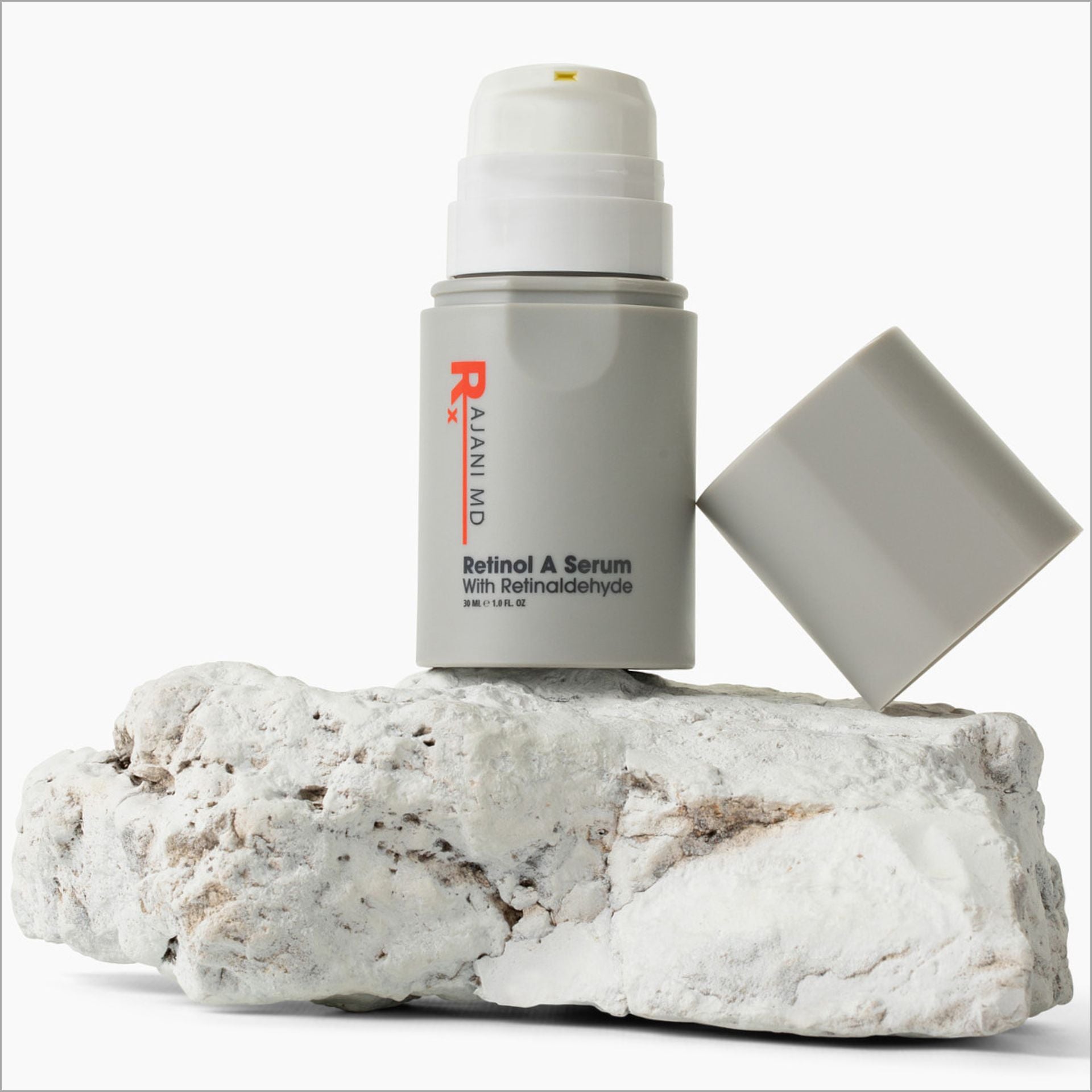
If your routine includes AHAs or retinols, apply them just before PlasmaRestore GLO Volufiline Cream in the evening. This allows the active ingredients to absorb fully while the cream locks in hydration and provides restorative support.
With consistent daily use, most users notice visible improvements in just a few weeks. Over time, your skin looks replenished, radiant, and beautifully balanced.
The Future of Facial Rejuvenation: Science Over Needles
At RajaniMD, we’re excited about what lies ahead in aesthetic skincare. The future is less about needles and more about intelligently formulated daily skincare that respects the body’s biology while delivering visible results.
For those dealing with the after-effects of rapid weight loss, especially those experiencing signs of Ozempic face, it’s reassuring to know that the decline in facial volume doesn’t have to be permanent. Ingredients like Volufiline, in the right formulation, offer a roadmap to restore while you maintain your health successes.
Visit our shop page to explore more doctor-approved, clinically tested options for your skin health.
<insert video: https://youtu.be/Wo3L_jqSvPI?si=W5d9fE1_nyJp5cuO >
Clinical Studies
Farage, Miranda A., et al. “Intrinsic and Extrinsic Factors in Skin Ageing: A Review.”
International Journal of Cosmetic Science, vol. 30, no. 2, 2008, pp. 87–95,
www.ncbi.nlm.nih.gov/pmc/articles/PMC2734976/
Quan, Taihao, and John J. Voorhees. “Molecular Mechanisms of Skin Aging and Age-Related Diseases.”
Journal of Investigative Dermatology Symposium Proceedings, vol. 15, no. 1, 2011, pp. 19–24,
www.ncbi.nlm.nih.gov/pmc/articles/PMC3168236/
Varani, James, et al. “Decreased Collagen Production in Chronologically Aged Skin.”
American Journal of Pathology, vol. 168, no. 6, 2006, pp. 1861–1868,
www.ncbi.nlm.nih.gov/pmc/articles/PMC1606554/
Pavicic, Tatjana, et al. “Hyaluronic Acid: A Key Molecule in Skin Aging.”
Journal of Clinical and Aesthetic Dermatology, vol. 4, no. 2, 2011, pp. 27–35,
www.ncbi.nlm.nih.gov/pmc/articles/PMC3583886/
Kang, Sungbin, et al. “Ultraviolet Irradiation Alters Dermal Structure and Collagen Composition.”
Journal of Investigative Dermatology, vol. 116, no. 6, 2001, pp. 915–919,
pubmed.ncbi.nlm.nih.gov/11407975/
Ganceviciene, Ruta, et al. “Skin Anti-Aging Strategies.”
Dermato-Endocrinology, vol. 4, no. 3, 2012, pp. 308–319,
DISCLAIMER: This video does not contain any medical or health related diagnosis or treatment advice. Content provided on this YouTube Channel is for informational purposes only. For any medical or health related advice, please consult with a physician or other healthcare professionals. Further, information about specific products or treatments within this video are not intended to diagnose, treat, cure or prevent disease.