






The skin under your eyes is roughly 0.5mm thick. That is up to ten times thinner than the skin on the rest of your face. It has fewer oil glands, less collagen density, and almost no subcutaneous fat to cushion it. By the time you hit 40, every one of those structural disadvantages has compounded.
Treating under-eye aging after 40 requires a routine that addresses the area from multiple angles: topical actives that target pigmentation and fluid buildup, Peptides that help improve the appearance of fine lines, and device therapy can complement topical skincare. That is the approach behind the Rajani MD Eye Routine, and here is how each piece works.
Why the Under-Eye Area Ages Differently
Before getting into products, it helps to understand what is actually happening beneath the surface. Under-eye aging is not just about wrinkles. Several processes happen at once, and they feed into each other.
The dermal-epidermal junction (DEJ) flattens with age. This is the basement membrane, where the outer and inner layers of skin meet, and in younger skin, it has a wave-like structure that keeps everything anchored tightly together. As that junction flattens, skin loosens and thins, making blood vessels and pigmentation more visible from the surface.
Simultaneously, collagen and elastin production slow. The orbital fat pad shifts and sometimes herniates forward, creating the puffy, baggy appearance that no amount of concealer can fully mask. Fluid accumulation due to sluggish lymphatic drainage contributes to swelling, especially in the morning.
And then there is pigmentation. Dark circles under the eyes come from a combination of increased melanin, visible vasculature showing through transparent skin, and post-inflammatory hyperpigmentation from years of rubbing, allergies, or sun exposure.
A single eye cream, no matter how good, cannot address all of these causes at the same time. That is why Dr. Rajani built a multi-step protocol that stacks targeted topicals with device therapy.

Step 1: Peptide-Based Line Relaxation
The first step in the routine targets expression lines, crow's feet, and fine lines that deepen when you squint, smile, or concentrate. The Revox Line Relaxer uses patent-pending LineRelax technology with eight peptides, including GABA, to visibly soften these lines at the surface. In a 12-week clinical study, 97% of subjects showed improvement in the appearance of expression lines and under-eye lines just 15 minutes after application.
Apply it to clean, damp skin before any other moisturizer. The cooling metal applicator helps with precision around the delicate orbital area. Use it twice daily, morning and night. A thin layer is all that is needed.
Step 2: Target the DEJ With an Age-Defying Eye Cream
The D·E·J Eye Cream is formulated specifically to address what happens at the dermal-epidermal junction. This product tackles eyelid hooding, under-eye crepiness, and the loss of elasticity that makes the whole eye area look tired and aged. It contains prebiotic and postbiotic ingredients that support the skin's microbiome around the eyes, which plays a larger role in skin health than most people realize.
Clinical results over 12 weeks showed visible improvements in eyelid drooping, crow's feet, and overall elasticity of the eye area. It works synergistically with the Revox Line Relaxer. Use the Line Relaxer as your base treatment, let it absorb, then follow with the D·E·J Eye Cream to lock in moisture and continue structural repair throughout the day or night.
Step 3: Brighten Dark Circles With Stabilized Vitamin C
Dark circles need their own dedicated treatment. The C+ Brightening Eye Complex uses MelaC+ Technology built around 10% THD Ascorbate, a stable, oil-soluble form of vitamin C available in skincare. Unlike standard ascorbic acid, which oxidizes quickly, THD Ascorbate remains active on the skin long enough to actually reduce visible discoloration.
The formula also contains three targeted peptides and antioxidants that address excess fluid buildup under the eyes. In clinical testing, 84% of subjects saw improvement in the appearance of dark circles with twice-daily use. The metal cooling applicator doubles as a mini massage tool that helps with lymphatic drainage while you apply, depuffing the area mechanically as the actives absorb.
This is the product to reach for if dark circles and puffiness are your primary concerns. Use it only on the under-eye area, tapping away any excess product with your ring finger.

Step 4: LED Device Therapy for Deeper Tissue Repair
Topicals work on the surface. The PlasmaGLO LED DUO Undereye Corrector works underneath it. This is a targeted under-eye device with dual patches and two specialized settings, one for sensitive skin and one for pigment-prone skin, that treats both eyes simultaneously in just nine minutes.
The device combines three technologies. Red light at 630nm diminishes inflammation and pigmentation while promoting cellular repair. Near-infrared light at 830nm penetrates deeper to stimulate fibroblast cells, boosting collagen and elastin production for plumper, firmer skin. And PEMF (Pulsed Electromagnetic Field) technology enhances cellular function and repair at a level no cream can reach.
Each session uses single-use hydrocolloid patches infused with hyaluronic acid, niacinamide, vitamin C, and Centella Asiatica. These patches brighten and firm the under-eye area while holding the LED device in place, so you can go hands-free and multitask. Three sessions per week is the recommended frequency, and the results compound steadily over weeks and months.
Browse the full range of LED devices to see how the DUO fits alongside the full-face and jowl mask for a comprehensive light-therapy protocol.
Step 5: Reduce Inflammation and Support Collagen Internally
The surface-level routine only works as well as the biology behind it allows. For the under-eye area specifically, inflammation and collagen loss are the two internal factors that accelerate visible aging.
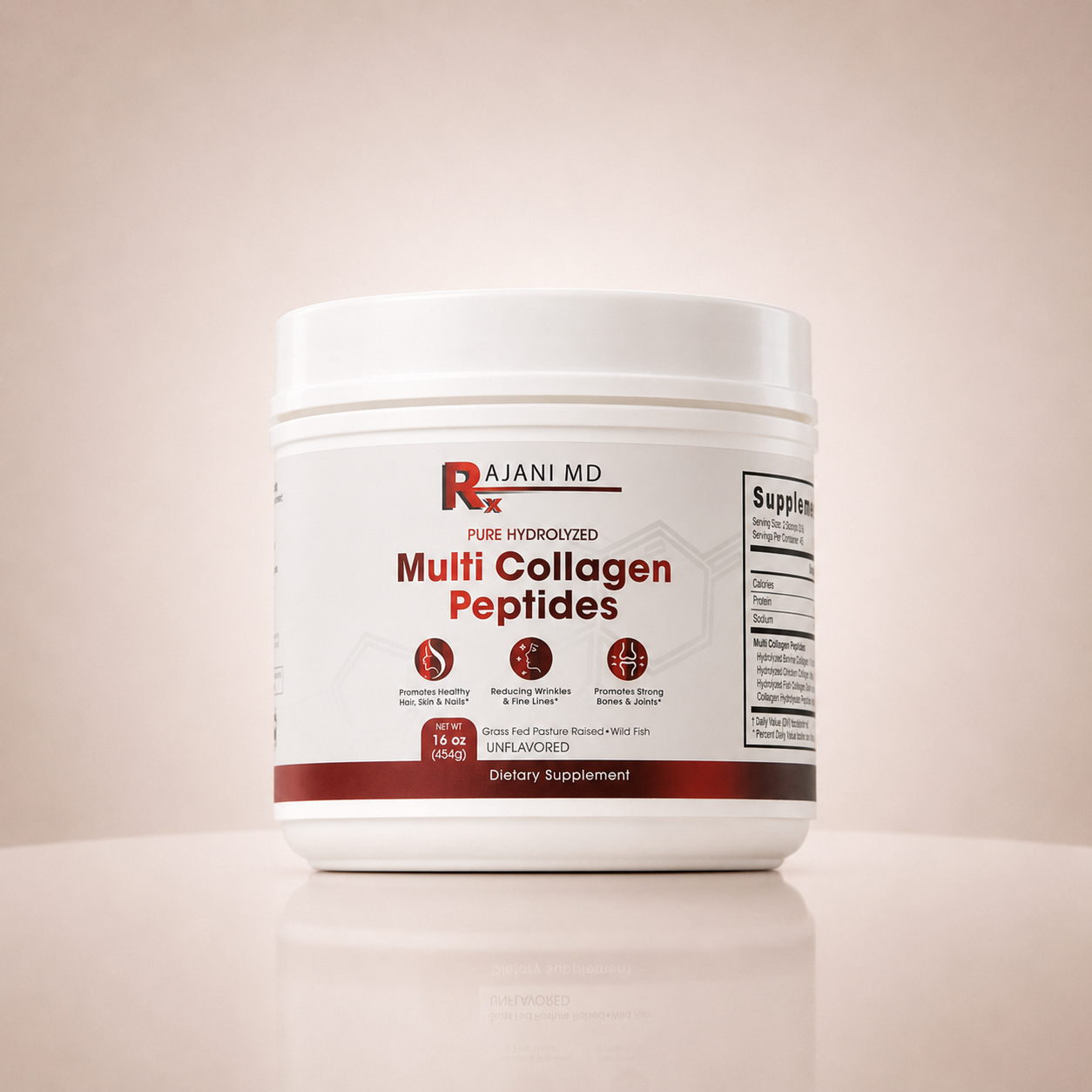
Krill Oil Softgels deliver omega-3 fatty acids in a highly bioavailable form that supports the skin's lipid barrier and reduces the chronic low-grade inflammation responsible for puffiness and vascular dilation under the eyes. Collagen Powder with five types of collagen peptides provides the building blocks your skin needs to respond to the LED therapy and peptide treatments happening on the surface.
Think of it this way: the LED device tells your skin cells to produce more collagen. The collagen powder gives them the raw material to actually do it.

The Full Eye Routine In A Nutshell
Here is the full eye routine breakdown:
Morning: Revox Line Relaxer, then D·E·J Eye Cream, then C+ Brightening Eye Complex on the under-eye area, then SPF.
Evening: Revox Line Relaxer, then D·E·J Eye Cream. On device nights, use the PlasmaGLO LED DUO for nine minutes before applying your eye creams.
Daily: Krill Oil Softgels and Collagen Powder with your morning routine.
You can shop for these products on our website.
FAQs
Q: How often should I use the PlasmaGLO LED DUO?
Three times per week for nine minutes per session is the recommended frequency. Results are cumulative and become more visible with consistent use over several weeks.
Q: Can I use the D·E·J Eye Cream and C+ Brightening Eye Complex together?
Yes. D·E·J Eye Cream targets the total eye area, including lids and crow's feet, while C+ Brightening Eye Complex specifically targets dark circles and puffiness under the eye. They address different concerns and work well layered.
Q: Will the LED DUO help with dark circles or just wrinkles?
Both. The red light reduces pigmentation and improves circulation, while the hydrocolloid patches are infused with vitamin C and niacinamide that specifically target dark circles and brighten the under-eye area.
Get Started Now
The complete Eye Routine page walks you through every product in order, with additional guidance on combining device sessions with your topicals.
The under-eye area may be small, but it requires the most layered approach of any part of your face. Treat it with that level of intention, and the results will follow.
Clinical Studies:
Barolet, D., Roberge, C.J., Auger, F.A., Boucher, A., & Germain, L. (2009). Regulation of Skin Collagen Metabolism In Vitro Using a Pulsed 660 nm LED Light Source: Clinical Correlation with a Single-Blinded Study. Journal of Investigative Dermatology, 129(12), 2751–2759. https://pubmed.ncbi.nlm.nih.gov/19587693/
Wunsch, A. & Matuschka, K. (2014). A Controlled Trial to Determine the Efficacy of Red and Near-Infrared Light Treatment in Patient Satisfaction, Reduction of Fine Lines, Wrinkles, Skin Roughness, and Intradermal Collagen Density Increase. Photomedicine and Laser Surgery, 32(2), 93–100. https://pubmed.ncbi.nlm.nih.gov/24286286/
Kim, H.K. et al. (2017). Effects of Radiofrequency, Electroacupuncture, and Low-Level Laser Therapy on the Wrinkles and Moisture Content of the Forehead, Eyes, and Cheeks. Journal of Physical Therapy Science, 29(2), 290–294. https://pubmed.ncbi.nlm.nih.gov/28265160/
Avci, P., Gupta, A., Sadasivam, M., Vecchio, D., Pam, Z., Pam, N., & Hamblin, M.R. (2013). Low-level laser (light) therapy (LLLT) in skin: stimulating, healing, restoring. Seminars in Cutaneous Medicine and Surgery, 32(1), 41–52. https://pubmed.ncbi.nlm.nih.gov/24049929/
DISCLAIMER: This video does not contain any medical or health related diagnosis or treatment advice. Content provided on this YouTube Channel is for informational purposes only. For any medical or health related advice, please consult with a physician or other healthcare professionals. Further, information about specific products or treatments within this video are not intended to diagnose, treat, cure or prevent disease.