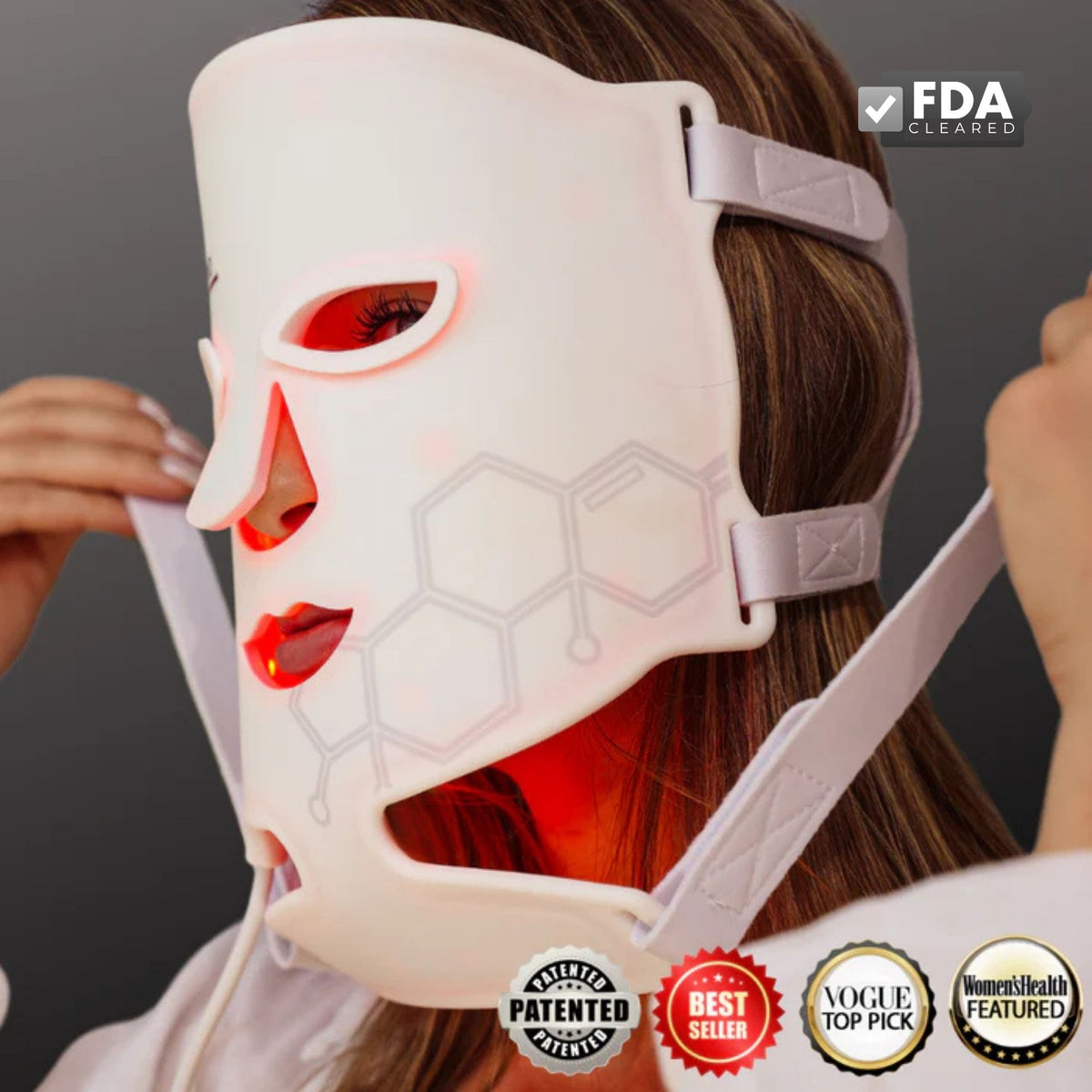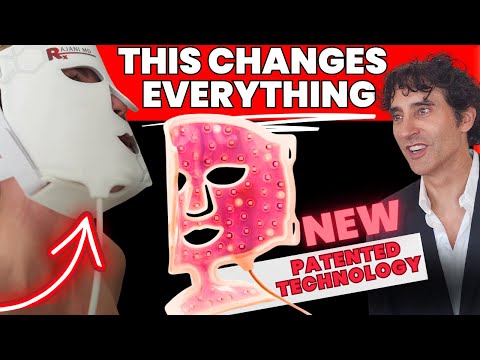
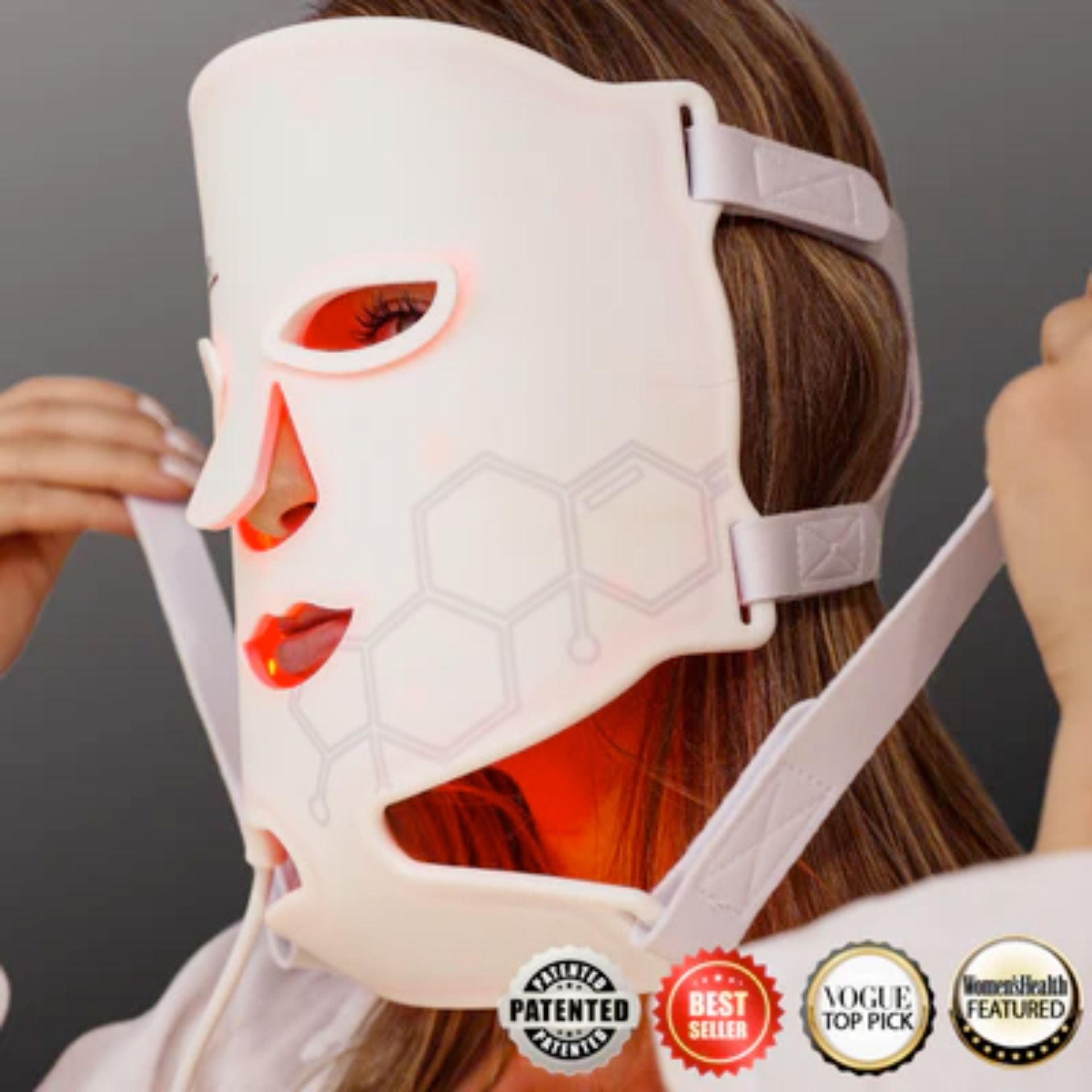




The first time many people see a red light LED mask in use, it can feel intense. Bright red and near-infrared light panels wrapped around the face look clinical and powerful. Naturally, the question follows: are red light therapy masks safe?
With the rise of at-home LED skincare devices, especially red light therapy masks, questions around safety, eye exposure, and daily use are common. This guide explains what current research suggests, how to use these devices responsibly, and what to look for in a well-designed LED light therapy mask.
Are Red Light Therapy Masks Safe?
Red light therapy masks are generally considered safe when used as directed.
They are:
-
Non-invasive
-
Free from ultraviolet (UV) radiation
-
Not heat-based
Unlike tanning beds or sun exposure, red light therapy operates on a different part of the light spectrum and does not rely on UV light. UV exposure is associated with skin damage, while red and near-infrared wavelengths are used for supportive skin applications. Since red light does not include UV exposure, it poses no risks comparable to sun exposure, as outlined by the American Academy of Dermatology.
Red light therapy works through photobiomodulation, a process studied in clinical and dermatology settings. At cosmetic intensity levels, According to the National Institutes of Health, it is designed to support natural skin processes without heat-based tissue damage.
This is not a laser or resurfacing treatment. It is controlled light exposure designed for at-home use.
How Red Light LED Masks Work
Red light therapy supports natural skin function by interacting with cells in the skin.
-
Red light is commonly used to support collagen activity and circulation
-
Near-infrared light penetrates deeper and supports underlying tissue
-
Blue light (in some devices) targets acne-causing bacteria
Over time, consistent use of an LED light therapy mask may support smoother-looking skin and improved overall skin appearance.
Devices like the PlasmaGLO™ LED Face and Jowl Mask include multiple modes, such as combined red and near-infrared settings designed for short, structured sessions. The PlasmaGLO™ LED HALO Face, Neck, and Hair Mask adds an adjustable near-infrared (NIR) toggle, offering more control for users with sensitivity or pigmentation concerns.
Eye Safety: What You Need to Know
Eye safety is one of the most common concerns with red light therapy masks.
Is Red Light Dangerous for the Eyes?
At cosmetic intensity levels, red light used in LED masks is not the same as medical lasers. It is not designed to damage the eyes.
However, the brightness can feel strong, especially in darker environments. Any discomfort is typically related to brightness rather than injury.
Should You Wear Eye Protection?
Eye protection is recommended for comfort.
-
Use built-in eye shields when available
-
Keep eyes closed during sessions
-
Avoid direct exposure to LEDs outside the mask
The PlasmaGLO™ LED HALO includes protective inserts to support this.
What About Near-Infrared (NIR)?
Near-infrared light is invisible but commonly used in LED skincare devices. At cosmetic levels, it is considered safe.
Devices like the PlasmaGLO™ LED HALO allow users to toggle NIR on or off, which may be helpful for those managing pigment sensitivity or melasma concerns.
Is It Safe for the Lips?
Lip skin is thinner and more sensitive, but red light therapy can be used carefully in this area.
When used according to guidelines, red light may support:
-
Appearance of vertical lip lines
-
Overall lip area skin quality
The PlasmaGLO™ LED Face and Jowl Mask is designed to target this area with controlled exposure. Recommended use is typically 3 to 5 sessions per week, with session times around 10 minutes.
More frequent use does not necessarily improve results. Consistency is more important than intensity.
Who Should Avoid Red Light Therapy?
Most healthy adults tolerate red light therapy well. However, caution is advised if you:
-
Are taking light-sensitizing medications
-
Have an active skin infection
-
Are experiencing a severe rosacea flare
If unsure, it is best to consult a healthcare professional before starting.
How to Use a Red Light LED Mask Safely at Home

For safe and effective use of an LED light therapy mask:
-
Follow manufacturer session times (commonly around 10 minutes)
-
Use 3 to 5 times per week unless directed otherwise
-
Start with clean, dry skin
-
Avoid heavy occlusive products before use
-
Store the device properly between sessions
PlasmaGLO™ LED masks are designed for short, structured sessions that integrate into a consistent skincare routine.
You can explore doctor-approved skincare routines or browse must-have LED skincare devices to see how these tools fit into a broader regimen.
Are Red Light Therapy Masks Safe for All Skin Tones?
Red light therapy does not target melanin, which makes it generally suitable across skin tones when used correctly.
Some devices, like the PlasmaGLO™ LED HALO, include adjustable near-infrared settings for users who prefer more control over exposure.
What Makes a Red Light Mask Safer?
When choosing a red light therapy mask, look for:
-
Medical-grade materials
-
Wavelengths in the 630–830 nm range
-
Even LED distribution
-
Built-in eye protection
-
Warranty and product support
-
FDA clearance when applicable
The PlasmaGLO™ LED HALO Face, Neck, and Hair Mask is FDA-cleared and designed for full coverage, while the PlasmaGLO™ LED Face and Jowl Mask offers more targeted treatment. If you are browsing options, explore the full LED therapy collection to compare formats.
Should You Be Concerned?
When used correctly, red light therapy masks are considered safe for most users.
The experience is closer to controlled light exposure without UV than to aggressive in-office procedures.
It is not a laser. It is not a peel. It is not heat-based.
It is a structured, non-invasive LED skincare approach designed to support long-term skin quality.

FAQ
Are red light therapy masks safe for daily use?
Most devices recommend 3 to 5 sessions per week rather than daily use.
Can red light damage your eyes?
Not at cosmetic intensity levels, though eye protection is recommended for comfort.
Is red light lip therapy safe?
Yes, when used according to device instructions.
Can I use red light therapy while pregnant?
Consult a healthcare provider before use.
Does red light therapy cause cancer?
Red light therapy does not use UV radiation and is not associated with the same risks as UV exposure.
References:
Aziz-Jalali, Mir Hadi, et al. “Comparison of Red and Infrared Low-Level Laser Therapy in the Treatment of Acne Vulgaris.” Indian Journal of Dermatology, vol. 57, no. 2, 2012, pp. 128–130. PubMed Central, PMC3352636.
Wunsch, Alexander, and Karsten Matuschka. “A Controlled Trial to Determine the Efficacy of Red and Near-Infrared Light Treatment in Patient Satisfaction, Reduction of Fine Lines, Wrinkles, Skin Roughness, and Intradermal Collagen Density Increase.” Photomedicine and Laser Surgery, vol. 32, no. 2, 2014, pp. 93–100. PubMed Central, doi:10.1089/pho.2013.3616.
Avci, Pinar, et al. “Low-Level Laser (Light) Therapy (LLLT) in Skin: Stimulating, Healing, Restoring.” Seminars in Cutaneous Medicine and Surgery, vol. 32, no. 1, 2013, pp. 41–52. PubMed Central, PMC4126803.
Barolet, Daniel, et al. “Regulation of Skin Collagen Metabolism In Vitro Using a Pulsed 660 nm LED Light Source: Clinical Correlation with a Single-Blinded Study.” Journal of Investigative Dermatology, vol. 129, no. 12, 2009, pp. 2751–2759. ScienceDirect, doi:10.1038/jid.2009.186.
DISCLAIMER: This video does not contain any medical or health related diagnosis or treatment advice. Content provided on this YouTube Channel is for informational purposes only. For any medical or health related advice, please consult with a physician or other healthcare professionals. Further, information about specific products or treatments within this video are not intended to diagnose, treat, cure or prevent disease.