




The at-home LED mask market has grown considerably in recent years, with a wide range of devices now available to consumers. While many of these products appear similar in design and marketing, their clinical performance can vary significantly depending on their specifications.
Vague or unverified claims make it difficult for buyers to distinguish between a well-engineered skincare device and one that may offer limited benefit. Understanding a few key technical specifications can help inform a more confident purchasing decision.
This guide outlines the most important factors to evaluate when considering a red light therapy mask for home use.
How The Science Actually Works
Before reviewing what to look for in a red light therapy mask, it is helpful to understand the underlying science behind it. A process called photobiomodulation describes how specific light wavelengths penetrate the skin and interact with mitochondria, which produce cellular energy.
When cells receive adequate light stimulation at the correct wavelengths, they may function more efficiently, supporting collagen synthesis, cellular repair, and a reduction in visible inflammation over time.
For this process to be effective, the device must emit precise wavelengths at an appropriate power level. A well-designed LED light therapy mask uses non-UV, non-thermal light, which means it does not generate heat and requires no recovery time.
The Checklist: 6 Things to Verify Before You Buy
The following specifications are worth confirming before making a purchase. Each one plays a role in whether a device may deliver meaningful results.
1. Wavelength Precision
The most important specification to confirm is the wavelength, measured in nanometers (nm). Wavelength determines how deeply light penetrates the skin. If a brand does not publish exact nanometer values, this may be worth noting before proceeding. Clinically referenced wavelengths include:
-
Red Light (630 to 660 nm): May support collagen and elastin production, helping address the appearance of fine lines.
-
Near-Infrared (830 to 850 nm): Penetrates more deeply into tissue and may support cellular repair and skin firmness.
-
Blue Light (415 to 460 nm): Targets the surface layer and may help reduce bacteria associated with breakouts.
Note: Devices that promote multi-color therapy without disclosing specific nm values may combine light types without delivering them at clinically relevant intensities.
2. Irradiance (Power Output)

Irradiance refers to the intensity of the light energy that reaches the skin, expressed in milliwatts per square centimeter (mW/cm²). Without adequate irradiance, cells may not receive sufficient stimulation to support the desired response. For home use, a range of approximately 20 to 40 mW/cm² is generally considered appropriate, with around 30 mW/cm² cited as a practical target.
Devices that do not publish irradiance data may be worth approaching with caution, as this figure is a key indicator of clinical viability.
3. LED Count and Coverage
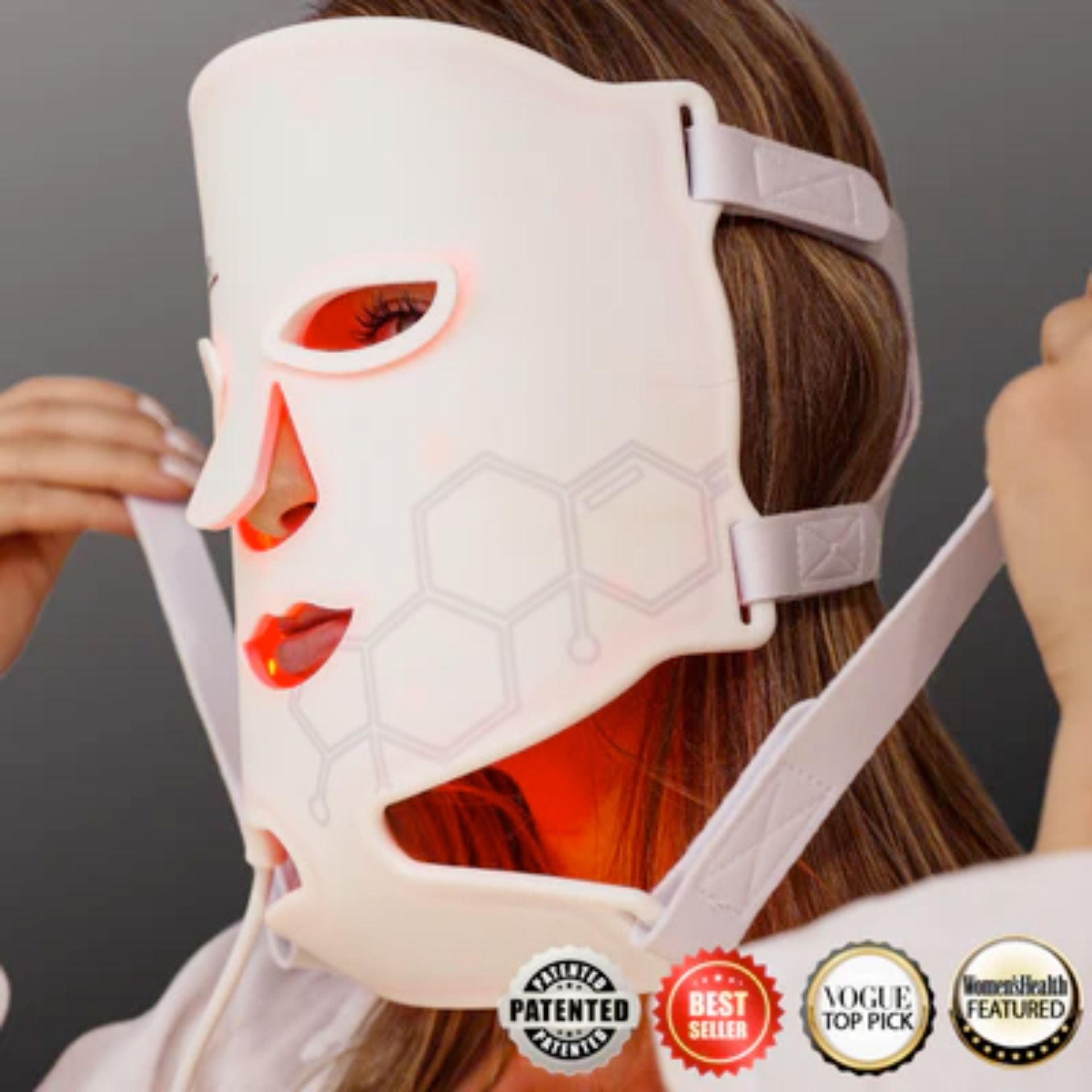
The number of LEDs in a mask influences how evenly light is distributed across the face. Sparse LED placement may result in uneven coverage, leaving areas such as the jawline and temples with limited exposure.
|
Feature |
Low-End Mask |
Clinical-Grade Mask |
|
LED Count |
Under 100 |
200 or more |
|
Material |
Rigid Plastic |
Medical-Grade Silicone |
|
Fit |
Gaps Present |
Flush, Contoured Fit |
Masks with rigid plastic shells can create distance between the light and curved facial areas, which may reduce the effective dose of light delivered to those regions.
4. Coverage Zone
Many masks are designed to treat only the central areas of the face, which may not adequately address the areas where early signs of aging are most commonly visible. Selecting a mask based on specific concerns can help ensure more targeted results.
-
Lower Face Laxity: For areas around the chin and jaw, a mask that wraps securely under the jaw may provide more uniform coverage. The PlasmaGLO LED Face and Jowl Mask is designed with this in mind.
-
Eyes and Nasolabial Folds: Under-eye puffiness and fold visibility may benefit from focused treatment, such as the PlasmaGLO LED DUO Patches.
-
Lips and Mouth: For lip lines or gum health support, the PlasmaGLO LED Lip and Mouth Device offers a more targeted option.
-
Scalp and Full Neck: For those addressing the hairline and neck together, the PlasmaGLO LED HALO Mask is designed to cover these broader areas.
5. Material and Heat Safety

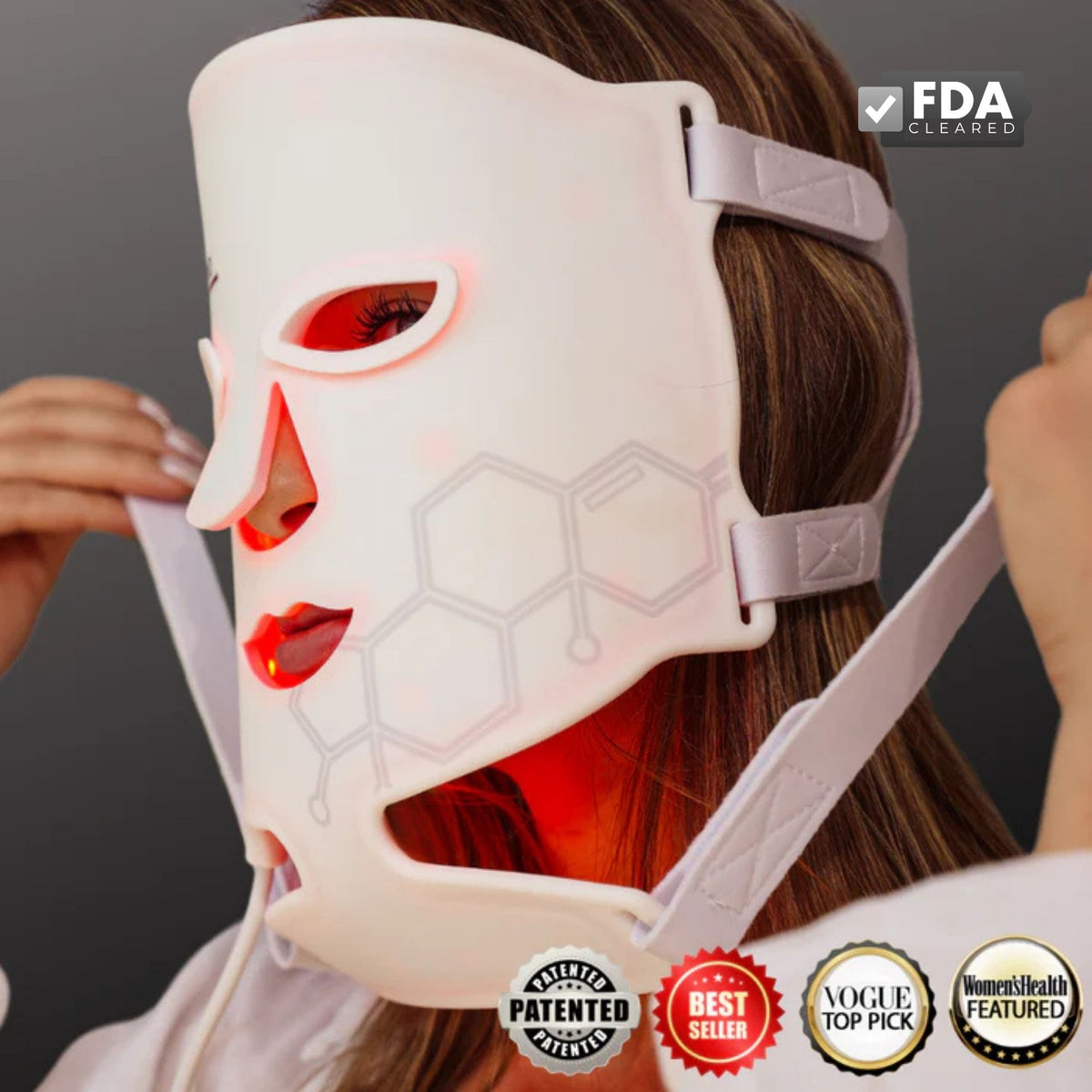
The material of a mask affects both comfort and efficacy. Medical-grade silicone is generally preferred because it conforms to the contours of the face, helping ensure that light energy reaches the skin rather than dispersing into the air.
LED therapy is a non-thermal process. A mask that generates noticeable heat during use may indicate a quality or engineering concern. Devices using wavelengths above 1,000 nm are more likely to produce unwanted heat, which may not be appropriate for regular facial use.
Confirming that a device is BPA-free and can operate at cool temperatures is a useful baseline check.
6. FDA Clearance and Safety Certifications
There is a meaningful distinction between a device being FDA-registered and FDA-cleared. FDA clearance indicates that the light therapy function has been evaluated for safety and efficacy for home use. In addition to clearance, manufacturing in a GMP-certified facility and independent irradiance testing by a third-party lab can offer further confidence in a device's quality standards.
Supporting an Informed Skincare Decision
Taking a few minutes to review these specifications can help distinguish a well-designed device from one that may not deliver meaningful clinical benefit. Confirming wavelength, irradiance, LED count, material quality, and regulatory clearance are practical steps that support a more informed purchase.
When used as part of a consistent skincare routine and paired with well-formulated products, a properly specified LED mask may support a more refreshed and healthier-looking complexion over time.
Clinical Studies
Avci, Pinar, et al. "Low-Level Laser (Light) Therapy (LLLT) in Skin: Stimulating, Healing, Restoring."
Seminars in Cutaneous Medicine and Surgery, vol. 32, no. 1, 2013, pp. 41–52,
National Center for Biotechnology Information, www.ncbi.nlm.nih.gov/pmc/articles/PMC4126803/.
Barolet, Daniel, et al. "Regulation of Skin Collagen Metabolism In Vitro Using a Pulsed 660 nm LED Light Source: Clinical Correlation with a Single-Blinded Study."
Journal of Cosmetic and Laser Therapy, vol. 11, no. 1, 2009, pp. 25–31,
ScienceDirect, www.sciencedirect.com.
Lee, Sun Young, et al. "A Controlled Trial to Determine the Efficacy of Red and Near-Infrared Light Treatment in Patient Satisfaction, Reduction of Fine Lines, Wrinkles, Skin Roughness, and Intradermal Collagen Density Increase."
Dermatologic Surgery, vol. 33, no. 8, 2007, pp. 973–980,
National Center for Biotechnology Information, www.ncbi.nlm.nih.gov.
Russell, Bruce A., et al. "Reversal of Aging Using Red Light and Near-Infrared Light Therapy."
Photomedicine and Laser Surgery, vol. 23, no. 1, 2005, pp. 21–27,
National Center for Biotechnology Information, www.ncbi.nlm.nih.gov.
Pavicic, Tatjana, et al. "Hyaluronic Acid: A Key Molecule in Skin Aging."
Journal of Clinical and Aesthetic Dermatology, vol. 4, no. 2, 2011, pp. 27–35,
National Center for Biotechnology Information, www.ncbi.nlm.nih.gov/pmc/articles/PMC3583886/.
National Institutes of Health, Office of Dietary Supplements. Vitamin C Fact Sheet for Health Professionals.
U.S. Department of Health and Human Services, ods.od.nih.gov/factsheets/VitaminC-HealthProfessional/.
Harvard T.H. Chan School of Public Health. Water and Hydration.
Harvard University, www.hsph.harvard.edu/nutritionsource/water/.
DISCLAIMER: This video does not contain any medical or health related diagnosis or treatment advice. Content provided on this YouTube Channel is for informational purposes only. For any medical or health related advice, please consult with a physician or other healthcare professionals. Further, information about specific products or treatments within this video are not intended to diagnose, treat, cure or prevent disease.